

Iams Cruelty return to peta.org
HOME Why Iams? FAQ Campaign Updates Get Active Donate Now
Search
 
Boycott Iams
Join PETA's Activist Network
See Demo Photos
Return Iams Products
Send Iams a Special Delivery
Talk to Your Local Shelter
More Ways to Help
Become a Member
Ads/PSAs
Brands Not Tested on Animals
Literature
Merchandise
Other Companion
Animal Food Issues
Video Video
Photos
ES CZ CR SK SL HUN
Iams Kid's Corner
Features > Mice to Iams: Stop Yanking Our Tails!

Mice to Iams: Stop Yanking Our Tails!

Mice beware—you’re next on Iams’ hit list! That’s right, we said mice. Purdue University researchers Drs. Bruce Watkins and Kevin Hannon have been given $195,140 by Iams to conduct a study entitled, “The Influence of N-3 Polyunsaturated Fatty Acids (PUFA) on Musculoskeletal Atrophy During Unloading.” From May 1, 2004, through June 30, 2006, mice will be subjected to seven days of hind limb muscle atrophy—the wasting away of muscle tissue—which the researchers will induce by “hav[ing] a piece of surgical tape applied to the tail which is then used to lift their rear limbs slightly off the floor,” according to a publicly released statement from Iams. After losing the use of their hind legs, the mice are scheduled to be killed and sliced up. Iams has scrambled to put together several excuses for funding this inhumane experiment, but they don’t have a leg to stand on!

Iams says: “The mouse study at Purdue University is very basic discovery work for which we sought non-animal alternatives and found none. It is based on a model that NASA has used for 20+ years to study weightlessness in humans.”

The fact is that non-animal alternatives do exist, especially for muscle atrophy experiments. Dr. Herman Vandenburgh—an expert on muscle atrophy—and his colleagues have been “developing a model for atrophy using bioartificial muscles [BAM] in his laboratory.” Using avian, mouse, rat, or human cells, Vandenburgh said, “[W]e can grow the bioartificial muscles in our lab and then we can induce atrophy by reducing the tension on the muscle [using a force transducer]. … The muscles generate less force, so they don’t make as much protein and they waste away.” Using this humane model, he’s able to test various treatments without having to subject live mice to debilitating muscle atrophy. The use of bioartificial muscles stands as a viable alternative that Iams could and should require Purdue’s Watkins and Hannon to use in place of live mice.

Iams says: “If the study is successful, we’ll know more about the role of enhanced nutrition in the bone/muscle wasting and in the healing process. This could help dogs delay such losses and to heal better/faster from surgery, long-term illnesses, or muscle and bone diseases.”

The fact is that this information already exists, and Watkins was the one who made the discovery! In Purdue University’s “21st Century Grant Final Report for October 2000-November 2003,” Purdue notes the following: “Researchers in the Schools of Veterinary Medicine and Agriculture have identified nutraceutical fatty acids that attenuate muscle and bone loss associated with disuse atrophy.”

When asked whether this discovery applied to dogs, Hannon (Watkins’ colleague) said, “We are confident that they [the fatty acids tested in this experiment] will work in dogs as they have in our rodent studies.” Thus, Iams can’t justify using live mice in the muscle atrophy experiment for the purpose of identifying beneficial fatty acids since such research has already been successfully completed and can confidently be applied to dogs, according to the very people who are being paid by Iams to again suspend mice by their tails.

Iams says: “The study is also seeking markers of bone and muscle atrophy that could be applied to investigating bone and muscle loss/healing in dogs. Additionally, this work could also lead to an alternative to muscle biopsies for evaluating muscle loss/healing and enable us to go to clinical studies of bone and muscle conditions.”

The fact is that markers of bone and muscle atrophy in dogs already exist. Regarding bone atrophy, Dr. Daniel C. Richardson says, “Serum and urinary markers of bone turnover may be of value in animals as noninvasive tools for determining the response of the skeleton to disease and injury.” Richardson also says, “Serum and urinary assays of bone markers provide a noninvasive alternative to bone biopsy in the study of bone metabolism in humans. Many of these commercial assays that were originally developed for use in humans have been shown to cross-react in dogs, and it should therefore be possible to use these assays to study bone remodeling in dogs. … Our findings confirm the utility of these assays in dogs.”

Molecular and cellular markers for muscle atrophy also already exist and could be used by Iams to investigate muscle loss and healing. Dr. Kenneth M. Baldwin has identified several such markers in rats. He notes, “[A]ny molecular marker for atrophy that can be identified in most rat models used in the study of muscle atrophy most likely will apply to mice and probably dogs, especially if the specific atrophy is applied to these animals. I think this is the case because of the universitality (sic) of [the] atrophy process acroos (sic) different species including humans.”

These are precisely the types of bone and muscle atrophy markers that Iams is seeking to find in the Purdue study. Clearly, Iams could successfully use these existing markers without having to reinvent the wheel and subject innocent mice to unnecessary cruel tests!

So What Can You Do to Stop This Barbaric Experiment?
Iams’ research policy states, “[T]he company [will not] use non-surgical methods to induce or simulate diseases that are not acceptable in nutritional or medical research on humans; nor will the company fund any university positions that may be involved in such activities for the study of cat and dog nutrition.” There’s no logical reason why this policy should exclude the mice currently suffering in the Iams-funded experiment at Purdue University. Please e-mail or write to Iams (at the address shown below) to demand that this loophole be closed immediately and that Iams immediately end its involvement (financial and otherwise) in this cruel muscle-atrophy experiment until Watkins and Hannon agree to use humane animal alternatives (e.g., bioartifical muscle technology).
Dan Rajczak, General Manager
Iams Company
7250 Poe Ave.
Dayton, OH 45414-5801
Please click the appropriate link to view our first, second, and third letters to Procter & Gamble (Iams’ parent company) regarding this heartless Iams-funded study.

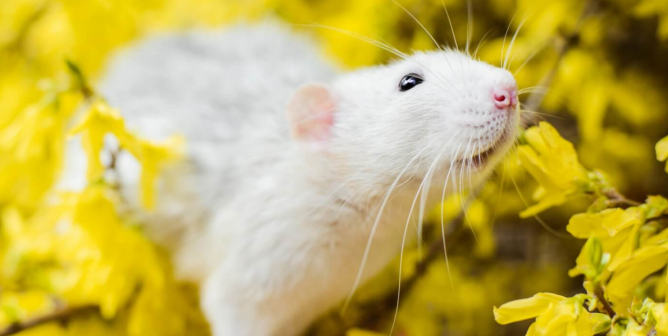
Mice are loving and inquisitive creatures who deserve to be treated humanely, just like any other living, breathing, and feeling animal. To learn more about mice and rats and why they are worth fighting for, please click here.


Help Animals Suffering in Laboratories
Action Alerts
Campaign Updates
Iams Continues Cruel Experiments on AnimalsIams Continues Cruel Experiments on Animals
Iams Flips the Bird at Validated Non-Animal Tests!Update: Iams Stops Using Chicks in Tests!
We Want Empty Cages, Not Slightly Nicer CagesWe Want Empty Cages, Not Slightly Nicer Cages
Print This Page    l    E-Mail This Page    l    Subscribe to E-News    l    Copyright © 2010 PETA Read our full policy    
About PETA    Donate Now    Privacy Policy    Disclaimer    PETA Web Sites   
Click here to return to PETA.org